
- English
- Español
- Português
- русский
- Français
- 日本語
- Deutsch
- tiếng Việt
- Italiano
- Nederlands
- ภาษาไทย
- Polski
- 한국어
- Svenska
- magyar
- Malay
- বাংলা ভাষার
- Dansk
- Suomi
- हिन्दी
- Pilipino
- Türkçe
- Gaeilge
- العربية
- Indonesia
- Norsk
- تمل
- český
- ελληνικά
- український
- Javanese
- فارسی
- தமிழ்
- తెలుగు
- नेपाली
- Burmese
- български
- ລາວ
- Latine
- Қазақша
- Euskal
- Azərbaycan
- Slovenský jazyk
- Македонски
- Lietuvos
- Eesti Keel
- Română
- Slovenski
- मराठी
- Srpski језик
Which Slat Wall Panel Solves Modern Interior Problems Without Overcomplicating Installation?
Article Summary: A well-chosen Slat Wall Panel can solve more than a visual design problem. It can help improve wall rhythm, hide plain surfaces, support cleaner project execution, and create a more premium interior atmosphere without requiring heavy construction. This article explains how buyers, designers, contractors, and project owners can evaluate slat wall panels from a practical perspective, including material selection, installation concerns, acoustic value, maintenance, application scenarios, and supplier selection. It also discusses how Hanhua Vision (Xiamen) New Material Technology Co., Ltd. supports modern decorative wall panel needs with a project-oriented mindset.
Table of Contents
- Article Outline
- Why Do Plain Walls Become a Costly Design Problem?
- What Makes a Slat Wall Panel Different from Ordinary Wall Cladding?
- Which Slat Wall Panel Features Matter Most for Real Projects?
- Where Can Slat Wall Panels Create the Strongest Visual Impact?
- How Can Buyers Compare Slat Wall Panel Options?
- Why Does Installation Planning Decide the Final Result?
- How Can Slat Wall Panels Reduce Long-Term Maintenance Pressure?
- What Should Buyers Look for in a Reliable Supplier?
- FAQ
- Conclusion
Article Outline
This article follows the real decision path of a buyer or project manager. First, it looks at the pain points behind flat, unfinished, or visually weak walls. Then it explains the role of a Slat Wall Panel in modern interiors, from appearance to functionality. After that, it compares key selection factors such as surface finish, substrate stability, dimensional proportion, installation method, durability, cleaning convenience, and project suitability. The article also covers common applications, installation planning, supplier evaluation, and frequently asked questions.
The goal is simple: to help you avoid choosing a panel only because it “looks nice” in a photo. A decorative panel must still perform well after production, shipping, installation, daily use, and long-term maintenance. That is where a thoughtful selection process becomes valuable.
Why Do Plain Walls Become a Costly Design Problem?
Many interior projects do not fail because the wall material is poor. They fail because the wall has no structure, no rhythm, and no clear relationship with the rest of the space. A large flat wall may look clean at first, but it can quickly become dull in a hotel lobby, retail store, office reception area, living room, showroom, restaurant, or public corridor.
Project owners often face several practical problems:
- The space looks unfinished even after painting or applying basic wall covering.
- The wall lacks depth, making the room feel flat and inexpensive.
- Custom carpentry takes too long and increases labor costs.
- Complex decorative structures are hard to repeat across multiple rooms or sites.
- Maintenance teams worry about dust, scratches, stains, and replacement difficulty.
- Designers need a feature wall that is attractive but not visually noisy.
A Slat Wall Panel answers these problems by adding repeated linear detail to the surface. The result is not only decorative. It gives the wall a sense of order. It can make a room feel taller, cleaner, warmer, or more architectural depending on the panel color, spacing, direction, and surface texture.
Practical insight: In commercial and residential interiors, the best wall panel is rarely the most dramatic one. It is usually the one that improves the space without creating future installation or maintenance trouble.
What Makes a Slat Wall Panel Different from Ordinary Wall Cladding?
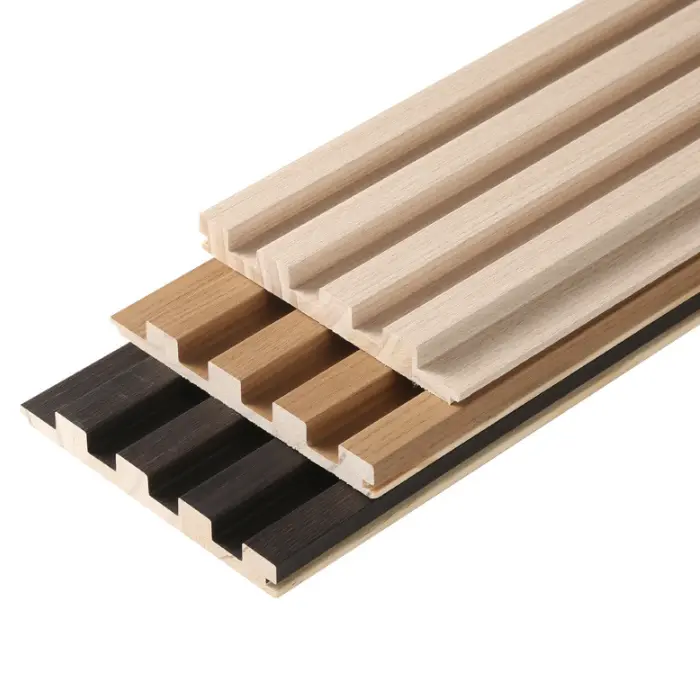
Ordinary wall cladding mainly covers a surface. A Slat Wall Panel does more than cover. It organizes the surface through repeated strips, grooves, or grille-like lines. This structure changes how light and shadow move across the wall. Even when the color is simple, the surface feels more layered.
The difference is easy to understand when compared with a flat board. A flat board gives a clean background. A slat panel gives rhythm. It can guide the eye upward when installed vertically, stretch the visual width of a room when installed horizontally, or create a calm architectural background when used behind furniture, display shelves, television walls, or reception counters.
For many buyers, the appeal of a Slat Wall Panel comes from this balance. It is more expressive than plain wallboard, but less risky than overly complicated custom modeling. It can fit modern, minimalist, natural, luxury, commercial, and hospitality-style interiors without forcing the whole room to follow one narrow design language.
Hanhua Vision (Xiamen) New Material Technology Co., Ltd. appears in this field as a wall panel supplier focused on decorative material solutions for interior projects. For buyers comparing slat panels, the company name matters not as a label alone, but as part of a larger question: can the supplier support stable product quality, suitable surface options, practical communication, and project-based selection?
Which Slat Wall Panel Features Matter Most for Real Projects?
When buyers compare a Slat Wall Panel, surface appearance is only the beginning. A panel that looks good in a sample photo may not perform well on a full wall. Real projects require consistency, proportion, durability, and installation predictability.
The most important selection factors include:
- Panel proportion: The width of each slat and the spacing between slats should match the scale of the room. Narrow spacing may look refined in small spaces, while wider spacing can work better on larger feature walls.
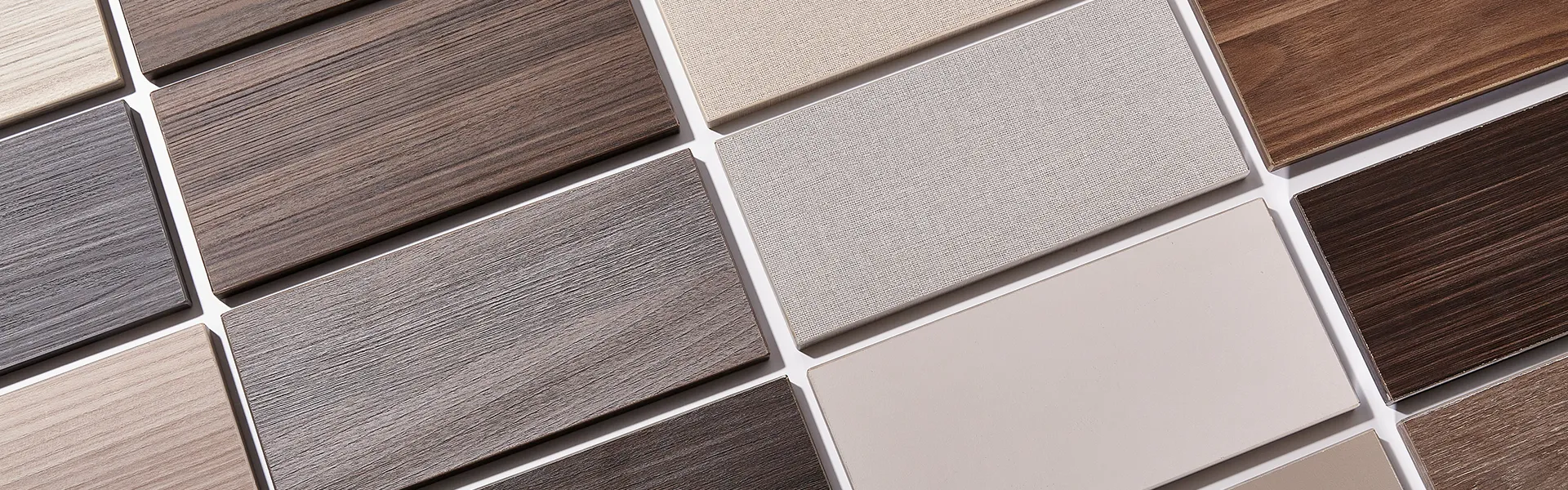
- Surface finish: Wood grain, solid color, matte texture, acoustic felt backing, or other finishes can change the feeling of the space. Buyers should match the finish with furniture, lighting, flooring, and ceiling materials.
- Dimensional stability: Panels should remain consistent during storage, installation, and daily use. Poor stability can lead to gaps, uneven surfaces, or visual misalignment.
- Installation method: A good wall panel should support efficient installation. Complicated cutting and alignment can increase labor cost and project risk.
- Cleaning convenience: Slatted surfaces naturally have grooves, so the surface should be practical to clean in homes, offices, shops, and public spaces.
- Project repeatability: For hotels, apartments, retail chains, and office projects, repeatable specifications are often more valuable than one-time custom designs.
A suitable Slat Wall Panel should feel designed, but it should also feel controllable. That is the key difference between a panel chosen for a showroom photo and a panel chosen for actual construction.
Where Can Slat Wall Panels Create the Strongest Visual Impact?
The best place to use a Slat Wall Panel is usually not every wall in the room. Slat panels work best when they are used with intention. They can define a visual center, soften a hard surface, connect different design elements, or bring texture to a plain area.
Common applications include:
- Living room TV walls: The slat lines help reduce the blank feeling around the screen and create a warmer background.
- Bedroom headboard walls: Vertical panels can add height and calm rhythm without heavy decoration.
- Hotel lobbies and corridors: Repeated slat patterns can make transitional spaces feel more refined and intentional.
- Office reception areas: A slat wall can create a professional first impression behind a company logo or front desk.
- Retail stores: Slat panels can improve product display backgrounds without stealing attention from the merchandise.
- Restaurants and cafés: Warm-toned panels can make dining areas feel more comfortable and visually organized.
- Public interiors: In schools, halls, clubs, and shared spaces, slat panels can help create structure and reduce visual emptiness.
In some projects, acoustic performance also becomes a concern. Slat acoustic wall panel designs may help improve the indoor sound experience when combined with suitable backing materials and thoughtful layout. This is especially relevant for meeting rooms, halls, entertainment spaces, and other interiors where echo control affects comfort.
How Can Buyers Compare Slat Wall Panel Options?
Many buyers compare products by price first. That is understandable, but price alone can be misleading. A cheaper Slat Wall Panel may become expensive if it causes waste, installation delays, uneven wall effects, or early replacement. A better comparison should include appearance, structure, application, maintenance, and supplier support.
| Selection Factor | What Buyers Should Check | Why It Matters | Common Mistake to Avoid |
|---|---|---|---|
| Visual Proportion | Slat width, groove depth, spacing, panel direction | Controls whether the wall feels elegant, heavy, crowded, or balanced | Choosing a pattern only from a close-up sample |
| Surface Finish | Wood tone, matte effect, color consistency, texture realism | Determines whether the panel matches the overall interior style | Ignoring lighting conditions at the project site |
| Material Stability | Substrate quality, panel flatness, resistance to deformation | Protects the final wall effect after installation | Focusing only on the surface layer |
| Installation Efficiency | Cutting method, fixing method, edge treatment, joint control | Reduces labor uncertainty and project delays | Selecting a panel before discussing installation conditions |
| Maintenance | Cleaning needs, dust control, scratch resistance, repair convenience | Affects daily user satisfaction and long-term cost | Assuming all decorative panels are equally easy to clean |
| Supplier Capability | Product range, sample support, communication, project experience | Helps buyers make safer decisions before bulk ordering | Choosing only by the lowest quotation |
This comparison method helps buyers move beyond appearance. It also encourages a more responsible purchasing process, especially when the panels will be used in commercial spaces, multi-room projects, or export-oriented orders.
Why Does Installation Planning Decide the Final Result?
Even a high-quality Slat Wall Panel can look disappointing if the installation is poorly planned. Slat panels rely on repeated lines, so small errors can become very visible. Uneven joints, poor alignment, messy corners, and careless cutting can damage the final impression.
Before installation, buyers and contractors should consider:
- Whether the base wall is flat, dry, and clean enough.
- How panel edges will meet doors, ceilings, floors, cabinets, or lighting strips.
- Whether electrical outlets, switches, screens, or display shelves need pre-cut planning.
- How the panel direction affects the visual height or width of the room.
- Whether the project needs removable, replaceable, or fixed installation.
- How many extra panels should be prepared for cutting waste and future repair.
For designers, the important point is not only choosing a beautiful surface. The panel must cooperate with construction details. For contractors, the important point is not only fixing panels to a wall. The final lines must remain straight, consistent, and visually calm.
This is why experienced suppliers are valuable. A supplier that understands practical project use can help buyers think through specifications, surface choices, and application scenarios before the order becomes difficult to change.
How Can Slat Wall Panels Reduce Long-Term Maintenance Pressure?
Maintenance is often ignored during the design stage. Yet for hotels, apartments, offices, restaurants, and retail stores, daily cleaning and long-term appearance matter as much as the first installation photo. A Slat Wall Panel should not become a burden after the project is delivered.
Good maintenance planning starts with the surface. A practical finish should resist obvious stains, support regular cleaning, and keep its appearance under normal indoor use. In busy commercial spaces, darker grooves, textured finishes, or balanced wood tones may help reduce the visibility of minor dust or marks. In residential interiors, warm and natural finishes can remain attractive without making the room feel too formal.
Buyers should also think about repair and replacement. If one area is damaged, can the panel be replaced without disturbing the whole wall? If the project has multiple rooms, can the same color or specification be reordered later? If cleaning staff will maintain the wall, is the surface easy enough to understand and handle?
A well-selected Slat Wall Panel should provide visual value while keeping daily care manageable. That balance is especially important for project owners who must control both design quality and operating cost.
What Should Buyers Look for in a Reliable Supplier?
Choosing a supplier is not only about finding someone who can produce panels. It is about finding a partner who understands the buyer’s real pressure: deadlines, budgets, sample approval, color consistency, packaging, communication, and after-sales coordination.
When evaluating a Slat Wall Panel supplier, buyers should ask several practical questions:
- Can the supplier explain which panel type fits the project instead of only recommending the most expensive option?
- Can samples be provided for color, texture, and structure confirmation?
- Can the supplier support consistent specifications for repeated orders?
- Does the supplier understand interior applications such as residential, commercial, hospitality, and public spaces?
- Can the supplier communicate clearly about packaging, delivery, and project requirements?
- Is the product range broad enough to support matching wall panel systems if the project needs more than one decorative material?
Hanhua Vision (Xiamen) New Material Technology Co., Ltd. can be introduced into buyer evaluation as a decorative panel manufacturer with product categories connected to modern wall panel applications. For buyers looking at slat wall panels, this kind of supplier background can make communication more efficient because the discussion does not stop at one product. It can extend to matching materials, design coordination, and practical project use.
Buyer reminder: A reliable supplier should help reduce uncertainty. If a panel looks good but the supplier cannot discuss application, proportion, packing, or project use clearly, the risk may appear later during installation.
FAQ
What is a Slat Wall Panel mainly used for?
A Slat Wall Panel is mainly used to create decorative rhythm, depth, and structure on interior walls. It is commonly applied to TV backgrounds, reception walls, hotel corridors, office public areas, retail spaces, bedrooms, and feature walls.
Is a Slat Wall Panel suitable for commercial projects?
Yes. Slat wall panels are often suitable for commercial interiors because they create a professional and organized appearance without requiring overly complex wall construction. They can be used in offices, stores, hotels, restaurants, showrooms, and public spaces.
Do slat wall panels only provide decoration?
No. Decoration is the most visible function, but slat wall panels can also help define space, improve wall layering, support acoustic design in certain structures, and coordinate with lighting, furniture, and ceiling systems.
Which direction is better for installing a Slat Wall Panel?
Vertical installation can make a room feel taller and more elegant, while horizontal installation can make a wall feel wider and more extended. The better choice depends on ceiling height, wall length, furniture layout, and the visual goal of the project.
How should buyers choose the right color?
Buyers should compare panel colors under real lighting conditions whenever possible. Warm wood tones often suit residential, hospitality, and relaxed commercial interiors. Darker tones can create a premium effect, while lighter colors may help small spaces feel cleaner and more open.
Can a Slat Wall Panel be combined with other wall panels?
Yes. In many projects, slat wall panels are combined with flat panels, marble-style panels, PET boards, fire-resistant boards, or other decorative surfaces. This creates contrast while keeping the overall wall design controlled.
Why should buyers request samples before ordering?
Samples help confirm texture, color, surface finish, slat proportion, and quality expectations. Photos are useful, but physical samples give buyers a more accurate understanding before bulk production or project installation.
Conclusion
A Slat Wall Panel is not just a decorative trend. When selected carefully, it can solve several real project problems at the same time: plain walls, weak spatial identity, lack of depth, difficult design repetition, and concerns about long-term maintenance. The most successful projects do not use slat panels randomly. They use them with clear proportion, suitable finish, thoughtful installation planning, and reliable supplier support.
For buyers, the smartest approach is to look beyond the first impression. Study the wall size, room function, lighting, furniture relationship, cleaning needs, and installation details. Then compare panel options based on performance as well as appearance. This is how a simple wall panel becomes a practical design solution rather than a risky decorative choice.
Hanhua Vision (Xiamen) New Material Technology Co., Ltd. offers a relevant option for buyers who need decorative wall panel materials for modern interior projects. Whether the goal is a warm residential feature wall, a refined commercial background, or a repeatable panel solution for larger projects, the right communication and product selection can make the result cleaner, safer, and more impressive.
Ready to Choose a Slat Wall Panel for Your Project?
If you are comparing materials, planning a feature wall, preparing a commercial interior project, or looking for a dependable decorative panel supplier, now is the right time to discuss your requirements. Share your project size, preferred finish, application space, and installation needs with the team. For samples, specifications, or tailored purchasing support, please contact us and let Hanhua Vision (Xiamen) New Material Technology Co., Ltd. help you move from idea to finished wall with confidence.
Previous:No News
 Hanhua
 Jake lin