
- English
- Español
- Português
- русский
- Français
- 日本語
- Deutsch
- tiếng Việt
- Italiano
- Nederlands
- ภาษาไทย
- Polski
- 한국어
- Svenska
- magyar
- Malay
- বাংলা ভাষার
- Dansk
- Suomi
- हिन्दी
- Pilipino
- Türkçe
- Gaeilge
- العربية
- Indonesia
- Norsk
- تمل
- český
- ελληνικά
- український
- Javanese
- فارسی
- தமிழ்
- తెలుగు
- नेपाली
- Burmese
- български
- ລາວ
- Latine
- Қазақша
- Euskal
- Azərbaycan
- Slovenský jazyk
- Македонски
- Lietuvos
- Eesti Keel
- Română
- Slovenski
- मराठी
- Srpski језик
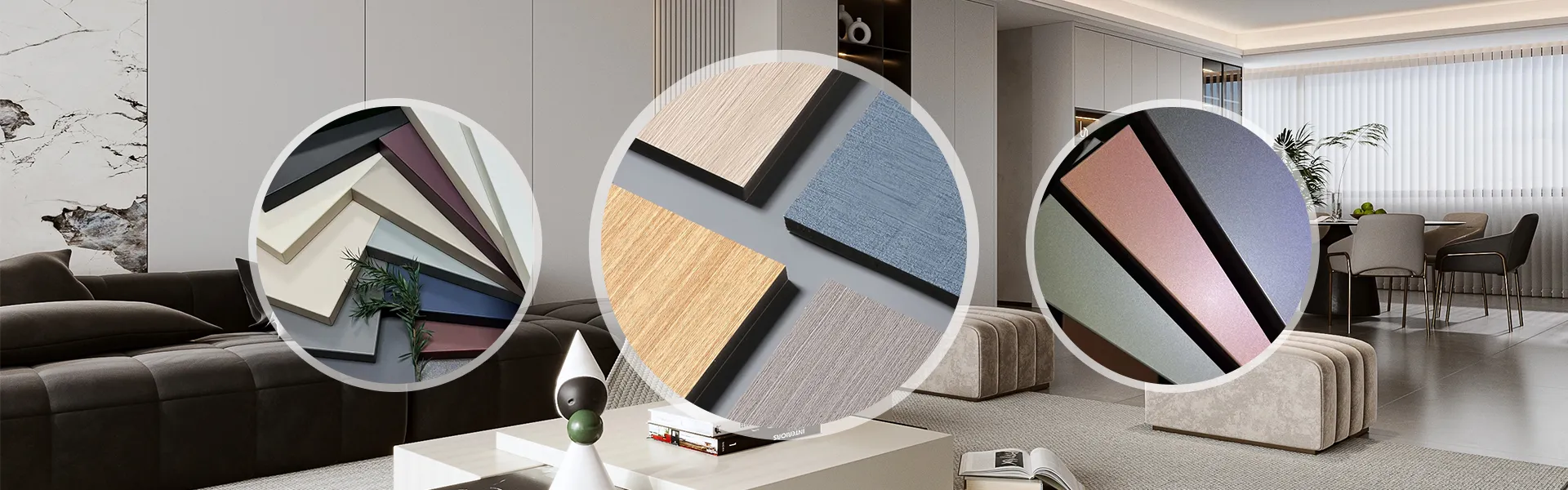
Custom Slat Wall Panel Manufacturer with 3-Year Warranty
In modern interior design, Slat Wall Panel is a very clearly functional decorative material.
It is not a “universal wall panel” used to cover all walls, but rather serves as a visual divider, façade rhythm, and spatial finisher.
In residential, commercial and public spaces, grid wall panels are often used on accent walls or in localized areas to transform a wall from a “flat surface” to a “layered façade” through the use of regular strips.
What is the basic role of the Slat Wall Panel?
Essentially, the role of Slat Wall Panel can be summarized in three points:
To break the monotony of a large flat wall
To enhance the vertical or horizontal extension effect of a space
To enhance the level of a wall without adding complex shapes
Compared to a monolithic styled wall or a complex structure, Slat Wall Panel is a much more restrained and controllable means of design, which is one of the reasons why it has been used so frequently in overseas projects.
Why are grille wall panels so common in modern projects?
In real life projects, many of the design needs are not so much about “wanting a complex shape” as they are about wanting the space to look more orderly and designed, but not overly so.
Slat Wall Panel fulfills this need.
The slat structure itself is highly regular and can be used repeatedly in different spaces without looking cluttered.
The advantages of Slat Wall Panel are especially evident in the following situations:
A space with limited floor height needs to be visually proportioned by vertical lines
Longer walls need rhythmic changes rather than large areas of white space
Need to echo furniture, lighting or ceiling systems
Grille wall panels are not “only decorative”
Although the most intuitive role of Slat Wall Panel is decorative, but in practice, it often also take on other functional roles.
For example:
as a back wall, weakening the presence of the TV, display cabinets, etc.
as part of the partition, to achieve visual separation but maintain transparency
as a partial module of the wall system, used in conjunction with the flat wall
This “half-decorative, half-structural” attributes, Slat Wall Panel in the overall wall paneling system more flexible. This “semi-decorative, semi-structural” property makes Slat Wall Panel more flexible within the overall wall panel system.
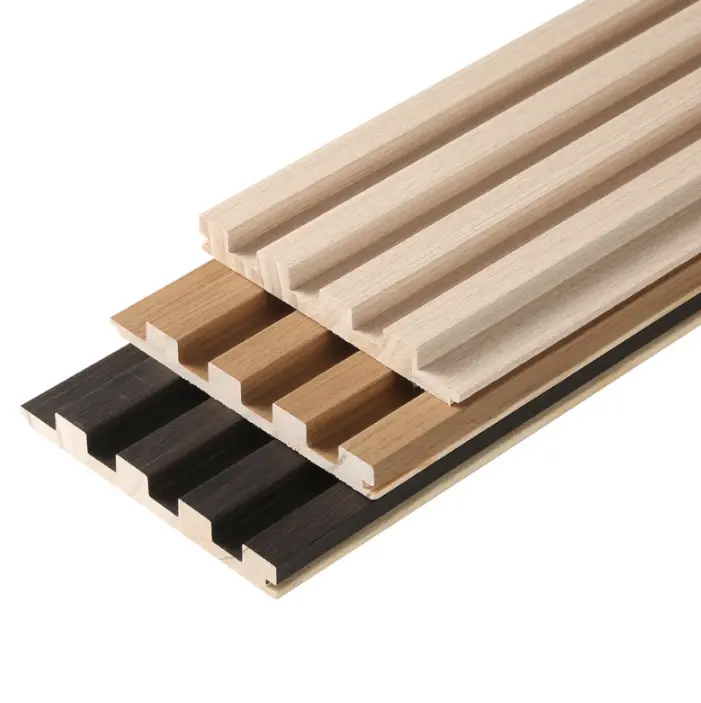
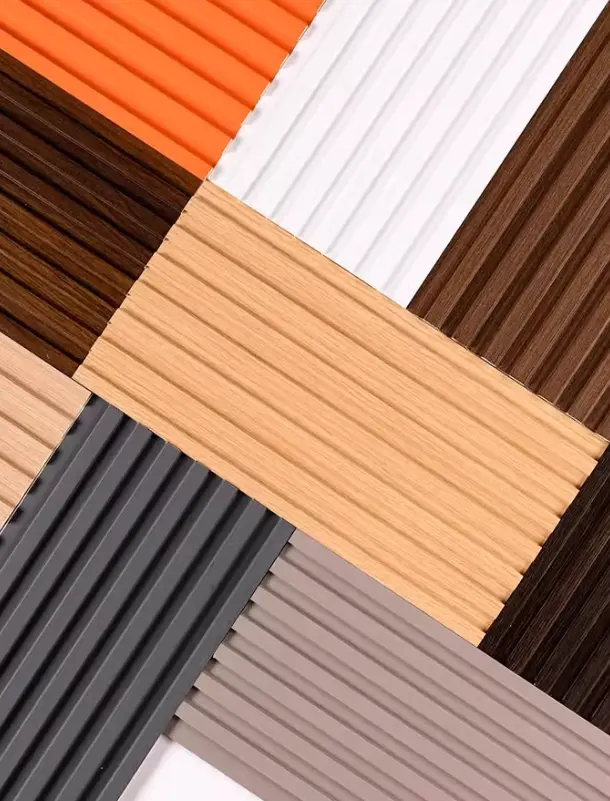
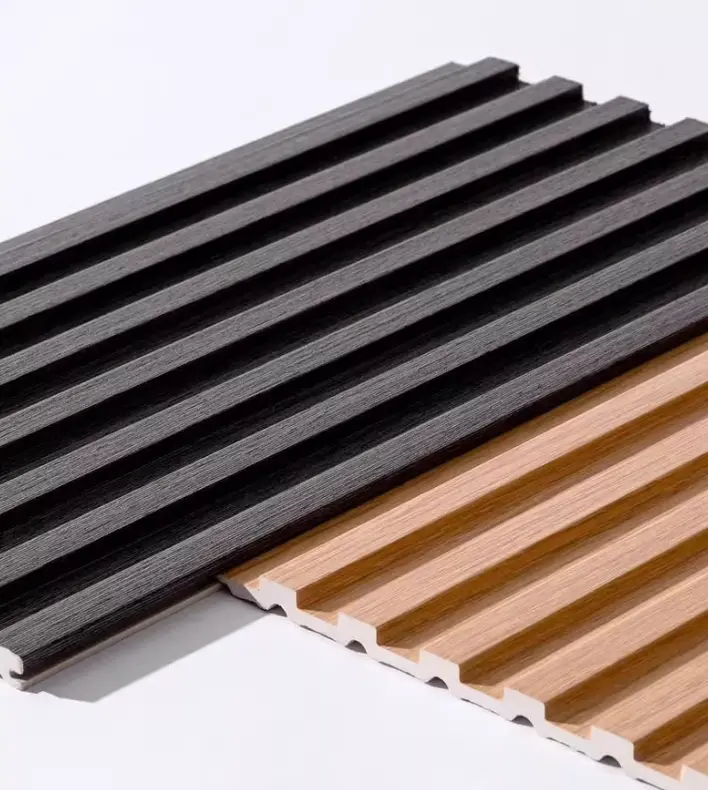
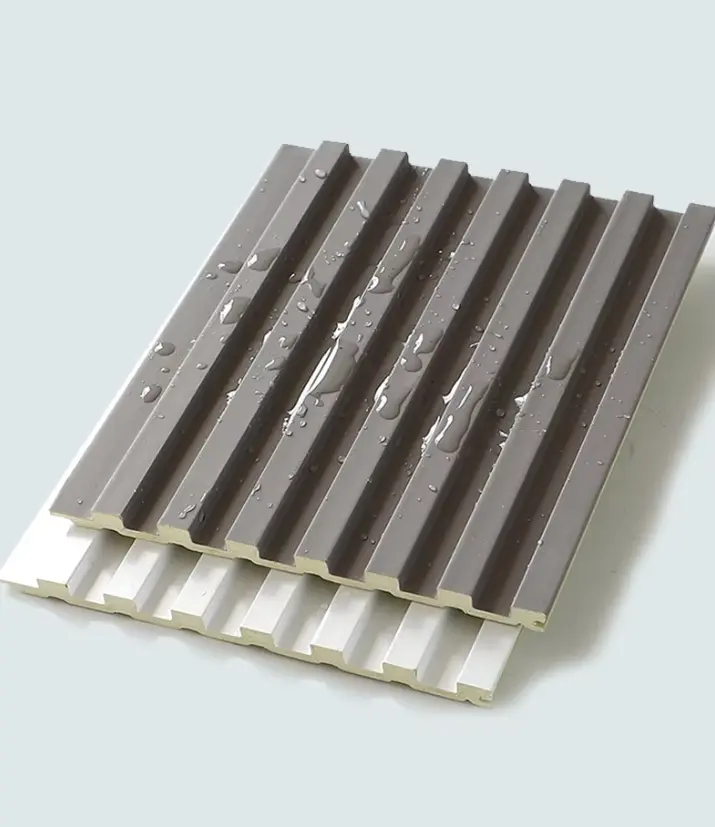
Size, spacing and proportion are more important than the material itself
In the application of grille wall panels, it is not just the surface material that really determines the effect, but the width of the strips, the spacing and the overall proportion.
If the proportion is not well controlled, even if the material itself is good, the final effect may look cluttered or oppressive.
Therefore, in actual projects, Slat Wall Panel usually use a combination of mature and proven specifications, rather than being completely randomly customized.
For overseas projects, this “specification + systematization” approach is more easily accepted by the construction and management teams.
What spaces are Slat Wall Panels better suited for?
From the actual project experience, Slat Wall Panel is more commonly used in:
Living room TV background wall
Entrance foyer or corridor end wall
Commercial space image wall
Office space public area
Hotel, club and other semi-public space
The common point of these areas is that:
Need to have a sense of design, but is not suitable for complex structure or large volume modeling.
Use with other wall panels for easier control of the overall effect
In many mature projects, Slat Acoustic Wall Panel are not used alone in large areas, but form combinations with flat panel walls.
For example:
Flat wall panels are used on the main wall
Slat Wall Panel is used in key areas or visual centers
Layers are formed through material or color variations
This type of pairing introduces variations without disrupting the spatial order, while ensuring overall unity
When is Slat Wall Panel an appropriate choice?
If your project requires:
Variation in wall layers, but you don't want to add complexity
Reproducible, controllable design elements
Synergistic use with an integral wall panel system
Low risk of construction and maintenance
Then Slat Wall Panel | Grille Wall Panels, would be a very sensible, and proven, choice.
- View as

Decorative Wood Slat Acoustic Wall Panels for Interior Noise Reduction
Decorative Wood Slat Acoustic Wall Panels for Interior Noise Reduction combining luxury wooden decoration and effective interior noise reduction. Made of eco-friendly formaldehyde-free polyester fiber and premium wood slats, lightweight, customizable and easy to install. Ideal for residential and commercial interior acoustic optimization and wall decorative upgrading.
Read MoreSend Inquiry
Luxury Slatted Acoustic Wall Panels
Luxury Slatted Acoustic Wall Panels integrate upscale wooden slat decoration with powerful sound absorption. Constructed with premium wood veneer and dense PET felt inner core, high NRC rating eliminates reverberation and reduces indoor noise. Various luxury wood grain finishes, stable moisture-proof structure, easy wall installation. Perfect for high-end villas, home cinemas, offices, meeting rooms and luxury hotel projects. Custom sizes, veneer colors and thickness supported. Factory wholesale decorative acoustic slat panels for residential & commercial interior renovation.
Read MoreSend Inquiry
Wood Slat Sound Absorbing Panels
Wood slat sound absorbing panels, high-performance acoustic slat wall panels with natural wood veneer and dense PET felt inner layer. High NRC value absorbs reverberation and cuts indoor noise effectively. Multiple wood textures, stable moisture-proof structure, simple installation. Widely used in recording studios, home cinemas, offices, meeting rooms and hotel interiors. Custom sizes, colors and thickness supported. Factory wholesale wood slat sound absorbing panels for commercial & residential acoustic renovation.
Read MoreSend Inquiry
Acoustic Sound Proof Wall Panels
Acoustic sound proof wall panels, premium wood slat soundproof wall panels built with high-density polyester fiber. High NRC value cuts echoes & blocks noise, eco MDF veneer with customizable wood grain finishes, simple wall installation. Perfect for home theater, recording studio, open office, conference room and hotel interior acoustic upgrade. We supply custom-size acoustic wall panels for commercial & residential soundproof projects at factory wholesale price.
Read MoreSend Inquiry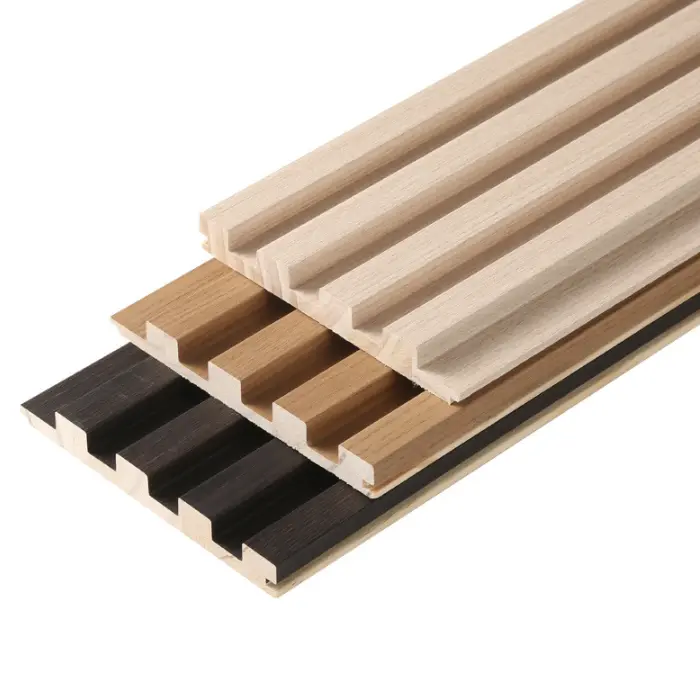
Slat Acoustic Wall Panel
As the professional manufacturer, Hanhua's Slat Acoustic Wall Panel not only has a good decorative effect, but also has a good sound insulation ability, which is suitable for spaces that need to improve the indoor acoustic environment, such as auditoriums, performance halls, recital rooms, large stages and other places. Through the combination of strip structure and stable substrate design, the Acoustic Diffuser Decorative Wall Paneling is not only aesthetically pleasing, but also reflects and absorbs sound in the space to achieve the effect of sound absorption and acoustic insulation. Ask for samples
Read MoreSend Inquiry
Hanhua is a professional Slat Wall Panel manufacturer and supplier in China. We warmly welcome you to purchase durable products at competitive price from our factory.
 Hanhua
 Jake lin