
- English
- Español
- Português
- русский
- Français
- 日本語
- Deutsch
- tiếng Việt
- Italiano
- Nederlands
- ภาษาไทย
- Polski
- 한국어
- Svenska
- magyar
- Malay
- বাংলা ভাষার
- Dansk
- Suomi
- हिन्दी
- Pilipino
- Türkçe
- Gaeilge
- العربية
- Indonesia
- Norsk
- تمل
- český
- ελληνικά
- український
- Javanese
- فارسی
- தமிழ்
- తెలుగు
- नेपाली
- Burmese
- български
- ລາວ
- Latine
- Қазақша
- Euskal
- Azərbaycan
- Slovenský jazyk
- Македонски
- Lietuvos
- Eesti Keel
- Română
- Slovenski
- मराठी
- Srpski језик
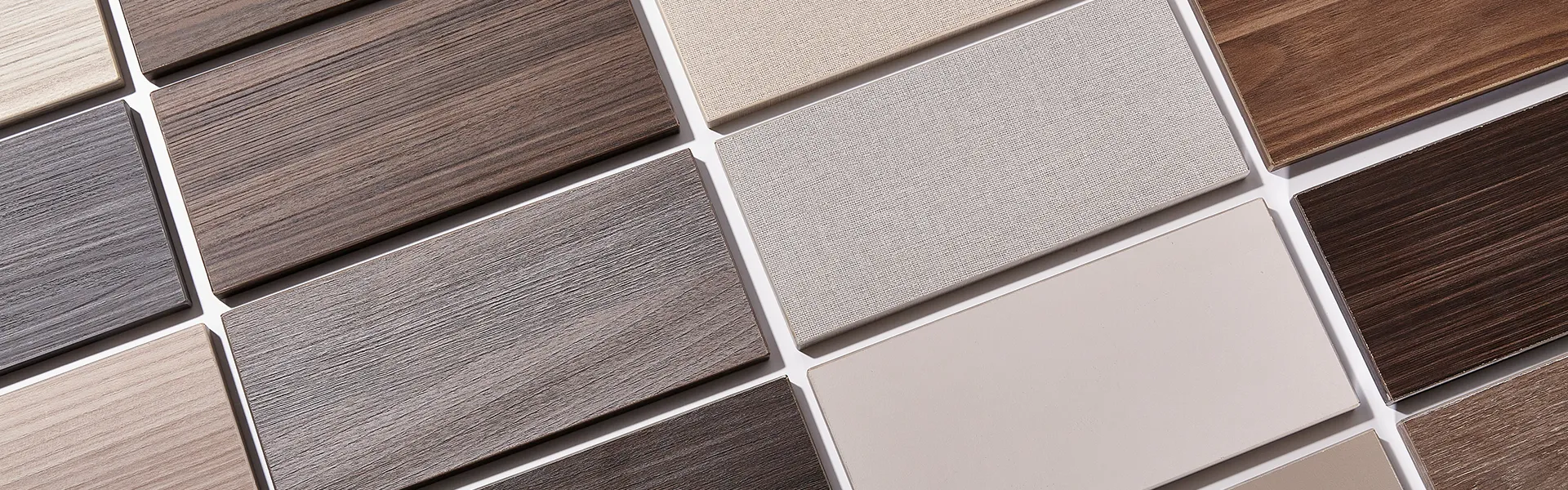
What Is a PET Board? A Complete 2026 Buying Guide
1. PET Board Structure: A Three-Layer Anatomy
A standard PET board consists of three layers.
The top layer is the PET film (0.12–0.25 mm thick) — the core layer determining the surface effect.
The middle layer is the adhesive, bonding the film to the substrate. Adhesive quality directly affects whether delamination or blistering occurs.
The bottom layer is the substrate.
The three most common substrates on the market are:
Particleboard — most cost-effective for standard home renovation.
Multi-layer solid wood board — better stability and screw-holding, ideal for humid regions or higher-grade projects.
MDF (Medium-Density Fiberboard) — exceptionally smooth surface, ideal for premium products demanding extreme flatness.
Substrate selection depends on local climate, usage scenario, and budget.
In humid southern regions, multi-layer boards are safer. For kitchen high-humidity environments, choose moisture-resistant substrates.
2. High-Gloss vs Skin-Touch PET: How to Choose?
High-gloss PET boards typically have a gloss level of 85–100 GU.
The visual effect approaches a mirror, with strong spatial presence — light reflection can make a small kitchen appear larger.
The downside: fingerprints and grease stains are easily visible, requiring frequent wiping.
Skin-touch PET boards (also called ultra-matte PET) register 1–5 GU gloss.
Completely non-reflective surface with a silky-smooth "baby skin" feel, and fingerprint-free.
Trend-wise, skin-touch PET market share surged from 2023 to 2025, evolving from a niche novelty into a mainstream choice.
On pricing, skin-touch PET film involves more complex manufacturing and typically costs 10%–20% more than equivalent high-gloss PET.
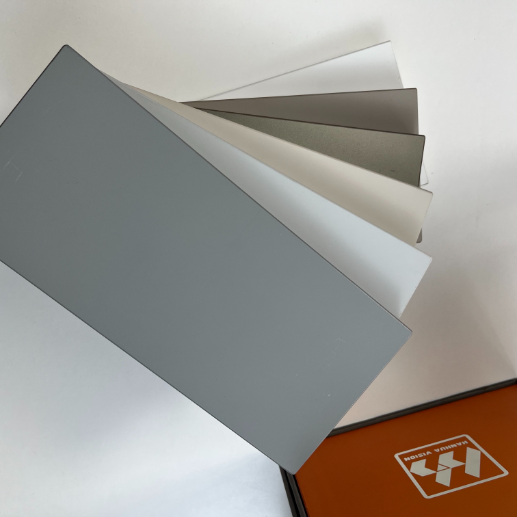
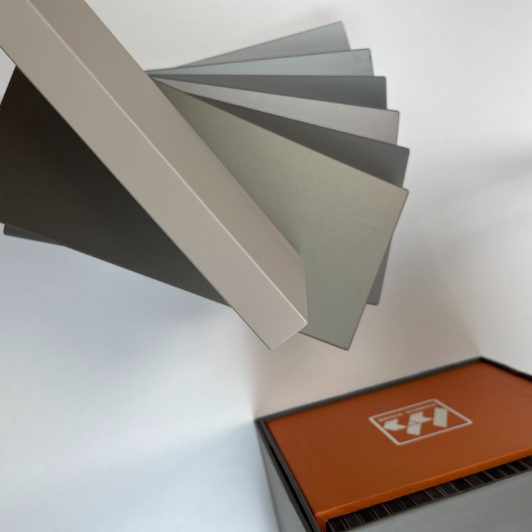
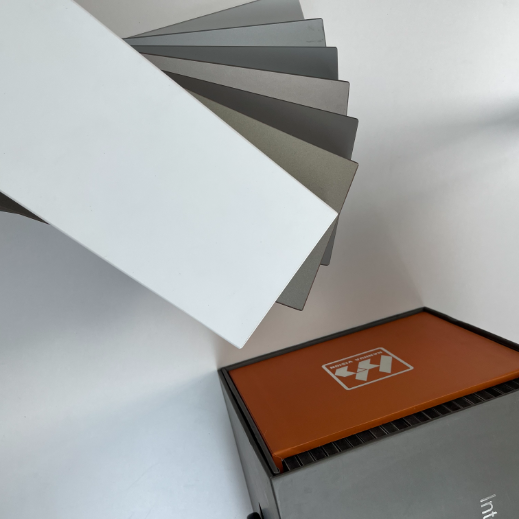
3. How to Judge PET Board Quality?
Once you have samples, you can perform quick quality checks across five dimensions.
First, inspect the surface. Under natural light at a 45° angle, a quality PET board should appear uniformly smooth, with no orange-peel texture, no bubbles, and no visible particles.
Second, test adhesion. Press and scrape the surface with a fingernail or coin — qualified PET film should not peel or separate.
Third, smell. Smell the edge of the board — a good PET board should have almost no odor. Pungent smells indicate issues with the adhesive or substrate.
Fourth, check edge-banding samples. Request finished edge-banded samples to verify that banding color matches perfectly, the edge line is smooth, and there is no glue overflow.
Fifth, request test reports. Ask for formaldehyde emission data (E0 or E1), surface scratch-resistance rating, and adhesion test results. Be cautious about suppliers who cannot produce such reports.
 Hanhua
 Jake lin