
- English
- Español
- Português
- русский
- Français
- 日本語
- Deutsch
- tiếng Việt
- Italiano
- Nederlands
- ภาษาไทย
- Polski
- 한국어
- Svenska
- magyar
- Malay
- বাংলা ভাষার
- Dansk
- Suomi
- हिन्दी
- Pilipino
- Türkçe
- Gaeilge
- العربية
- Indonesia
- Norsk
- تمل
- český
- ελληνικά
- український
- Javanese
- فارسی
- தமிழ்
- తెలుగు
- नेपाली
- Burmese
- български
- ລາວ
- Latine
- Қазақша
- Euskal
- Azərbaycan
- Slovenský jazyk
- Македонски
- Lietuvos
- Eesti Keel
- Română
- Slovenski
- मराठी
- Srpski језик
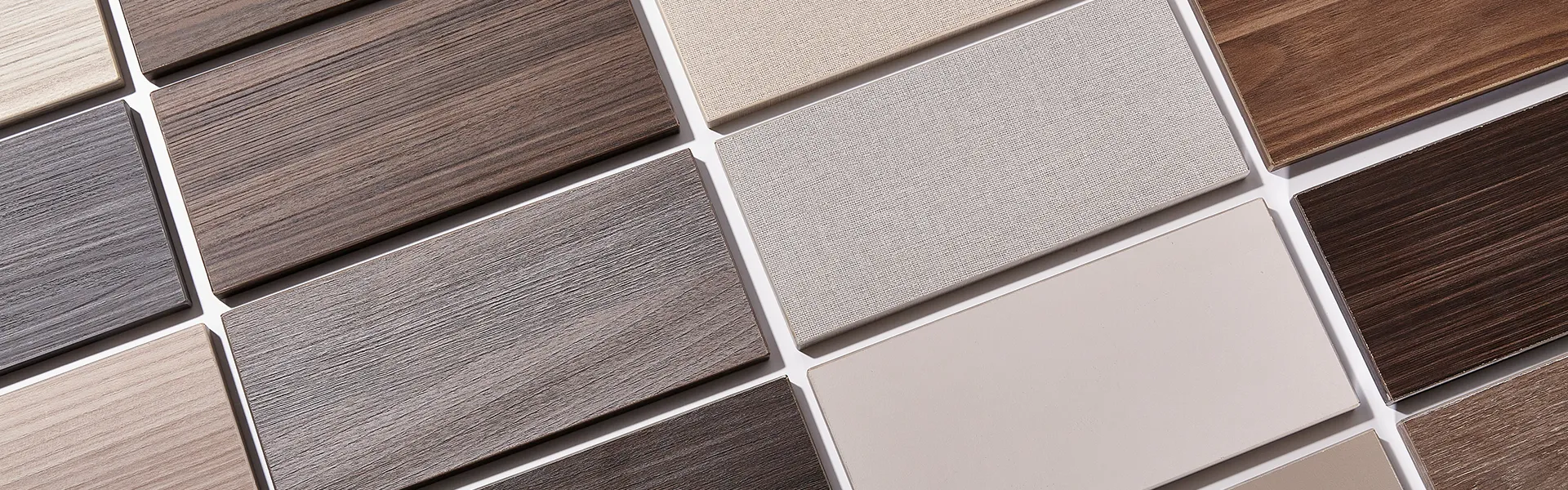
Why Is Fire Retardant Board the Smarter Choice for Safer and Better Looking Interiors?
Article Summary
Choosing interior boards sounds simple until a project must balance safety, appearance, durability, cost control, and installation efficiency at the same time. That is exactly where Fire Retardant Board becomes valuable. In this article, I explain what buyers often get wrong when selecting decorative boards, why standard panels may create hidden risks in public and commercial spaces, and how the right fire-retardant solution can help reduce project pressure without sacrificing design. I also walk through materials, common application scenarios, selection priorities, and practical buying questions so readers can make a more confident decision.
Table of Contents
- Outline
- Why do so many buyers struggle with board selection?
- What does Fire Retardant Board really do in a real project?
- Which customer pain points can it solve?
- How does it compare with ordinary decorative boards?
- Where is it most useful?
- How should I choose the right specification?
- What mistakes should buyers avoid?
- FAQ
- Why is now the right time to contact us?
Outline
- The real reason material selection becomes difficult in commercial interiors
- What Fire Retardant Board is and what it is not
- The most common project-side problems it helps reduce
- A practical comparison between ordinary panels and fire-retardant solutions
- Typical use cases in public buildings, hospitality, offices, and custom interiors
- How to choose surface, substrate, size, and thickness more efficiently
- Frequent sourcing mistakes that increase rework, delays, or risk
- Answers to the questions buyers ask before sending an inquiry
Why do so many buyers struggle with board selection?
I have seen many interior material decisions become complicated for one simple reason: buyers are not only purchasing a panel, they are purchasing peace of mind for the finished space. A decorative board may look perfect in a sample room, but once it enters a hotel, office, retail chain, showroom, apartment project, or public corridor, expectations change immediately. Suddenly the board must look clean, install smoothly, remain dimensionally stable, fit the design concept, and still respond to stricter safety expectations.
This is why Fire Retardant Board keeps getting more attention. It is not just about having a decorative finish with an extra functional label. It is about reducing the gap between what looks good on paper and what performs better in real-world interiors. That is also why companies such as Hanhua Vision (Xiamen) New Material Technology Co., Ltd. have focused on offering more flexible panel options for buyers who need both decorative value and safer material choices in one product line.
Many customers come in with very practical concerns:
- Will this board help me meet project requirements more smoothly?
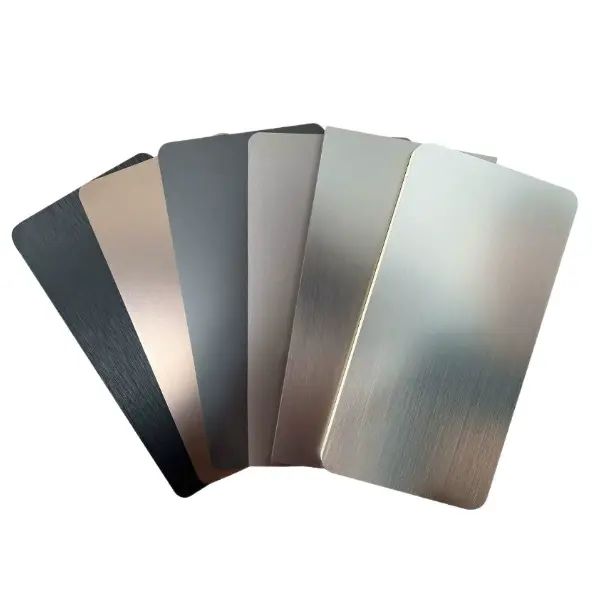
- Can I keep a wood, marble, or modern metallic finish without switching to a dull-looking surface?
- Will the panel size and thickness fit my furniture or wall application?
- Can I source consistently for larger orders?
- Will installation and fabrication remain manageable for my team?
These are not abstract questions. They are the reasons why material selection delays tend to happen and why the wrong board can cost more later than it saves upfront.
What does Fire Retardant Board really do in a real project?
The first thing I always clarify is this: Fire Retardant Board does not mean a magically indestructible material that ignores every heat source forever. What it generally offers is improved resistance to flame spread and slower combustion behavior compared with ordinary decorative boards. In practical use, that matters because slowing down flame development can support safer interior planning and make the material more suitable for projects with clearer fire-related requirements.
In other words, it helps buyers bridge a common contradiction. They want warmth, texture, and decorative freedom, but they also want a board that fits more demanding environments. A well-designed fire-retardant panel helps balance those two needs.
A good buying mindset is not “I only need something decorative.” It is “I need something decorative that still performs responsibly when the environment becomes more demanding.”
This shift in thinking is exactly why Fire Retardant Board is often considered for fixed furniture, wall-facing structures, display systems, commercial interiors, and public access spaces where a standard board may not feel like the safest long-term choice.
Which customer pain points can it solve?
I think the most useful way to understand this material is through the problems it helps reduce. Buyers rarely search for a panel because they love technical categories. They search because something in the project is difficult, risky, or inefficient.
- It helps reduce safety-related concerns in higher-traffic interiors. Public-facing spaces naturally demand more caution than private rooms.
- It helps maintain decorative consistency. Many customers do not want to abandon wood grain, marble visuals, or metallic aesthetics just to gain functional benefits.
- It helps support custom fabrication. Buyers often need thickness choices, larger lengths, or compatibility with furniture manufacturing processes.
- It helps streamline multi-purpose sourcing. Instead of buying one material for appearance and another for function, they can often consolidate decisions.
- It helps reduce project hesitation. When a board fits both visual and practical requirements, approval tends to move faster.
That combination is what makes Fire Retardant Board attractive to architects, contractors, furniture manufacturers, and importers who need materials that are easier to justify to clients and end users.
How does it compare with ordinary decorative boards?
Buyers often ask whether a fire-retardant option is worth the extra attention compared with standard decorative panel products. I find that the answer becomes clearer when the comparison is framed around project goals instead of price alone.
| Key Factor | Ordinary Decorative Board | Fire Retardant Board |
|---|---|---|
| Flame response | Usually designed mainly for appearance and basic interior use | Designed to slow flame spread more effectively in suitable applications |
| Project suitability | May fit residential or lower-demand interiors | Often preferred for commercial, hospitality, office, and public settings |
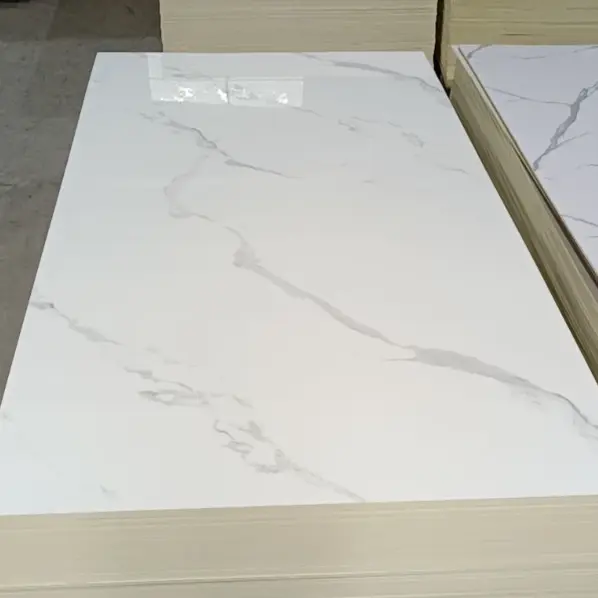
| Decorative flexibility | Can offer many finishes | Can also provide wood, marble, brushed, and other visual options |
| Buyer confidence | May raise more questions in stricter spaces | Often easier to discuss when safety performance matters |
| Application range | More limited in demanding environments | Broader appeal across furniture, walls, displays, and commercial interiors |
For me, the takeaway is simple. If a project involves more people, more visibility, more scrutiny, or more design pressure, Fire Retardant Board usually becomes a more strategic option than an ordinary board selected only for surface appearance.
Where is it most useful?
This material makes the most sense in spaces where appearance and responsibility must work together. It is especially useful when clients want the finished environment to feel premium rather than overly industrial.
Typical applications include:
- Hotel furniture and decorative wall structures
- Retail displays and branded commercial interiors
- Office furniture systems and partition-facing panels
- Public building interior surfaces
- Apartment or serviced residence projects with stronger material expectations
- Custom cabinetry and fixed furniture in visible public-use areas
One reason these applications stand out is that they often need surface variety. A board that only performs but does not look right creates a different kind of problem. That is why decorative choices matter so much. When buyers can choose from wood-effect, marble-effect, brushed, or other finishes, it becomes much easier to keep the overall design language intact.
How should I choose the right specification?
I usually suggest that buyers evaluate a Fire Retardant Board through four practical checkpoints: surface effect, substrate, thickness, and size. These four factors shape most of the final result.
| Selection Point | What to Consider | Why It Matters |
|---|---|---|
| Surface finish | Wood grain, marble look, brushed metal, or other decorative textures | It determines whether the board fits the target interior style |
| Substrate type | MDF, HDF, particle board, plywood, or other stabilized bases | It affects fabrication, strength, cost balance, and end-use suitability |
| Thickness | Common options may include 9 mm, 12 mm, 15 mm, 18 mm, and thicker customized variants | It influences structure, durability, and furniture processing needs |
| Panel size | Standard dimensions or custom lengths for project planning | It helps reduce waste and improves installation efficiency |
I also think buyers should ask one more question early: “Am I purchasing for flat surfaces only, or do I need shaped or curved applications too?” This matters more than many people expect. Some projects include rounded corners, curved furniture fronts, or more distinctive structures. If the decorative fire-retardant panel system can support those needs, it gives the designer much more freedom.
That is one of the more overlooked benefits of a capable supplier. The value is not only in the board itself, but in how flexibly it can support your fabrication reality.
What mistakes should buyers avoid?
Even strong materials can underperform when the buying process is rushed. These are the mistakes I see most often:
- Choosing only by visual sample. A beautiful finish alone does not tell you whether the board suits the actual environment.
- Ignoring substrate compatibility. The visible top layer matters, but the substrate strongly affects processing and final stability.
- Forgetting fabrication needs. A board must fit cutting, edge handling, furniture assembly, or installation conditions.
- Overlooking size planning. Standard sheet dimensions may not be ideal for your exact production layout.
- Not discussing volume and continuity early. Stable supply is critical for multi-stage or repeat projects.
I would add one more: do not assume every Fire Retardant Board is identical just because the category name sounds the same. The decorative layer, the substrate, the thickness, the processing options, and the level of project support can all change the buying outcome significantly.
FAQ
-
Is Fire Retardant Board only for large public projects?
Not at all. It is especially valuable in commercial and public interiors, but it can also be a sensible choice for premium interior furniture and decorative applications where buyers want an extra level of confidence. -
Can it still look decorative and modern?
Yes. One of the main reasons buyers choose this category is that they do not want to compromise on style. Wood, marble, and metallic effects are often available depending on the product system. -
Can I request custom sizes or thicknesses?
In many cases, yes. This depends on the supplier’s manufacturing capability, but customization is often a major advantage for project buyers and furniture factories. -
Is it suitable for furniture as well as wall-facing applications?
Yes, many fire-retardant decorative boards are considered for fixed furniture, cabinets, wall structures, display systems, and similar interior uses. -
What should I prepare before sending an inquiry?
It helps to provide your target application, surface preference, panel size, thickness, order quantity, and whether you need standard or customized production.
Why is now the right time to contact us?
If you are comparing materials for a hotel, office, showroom, apartment fit-out, public building, or custom furniture project, this is the stage where the right board can prevent a lot of downstream friction. The sooner you define the correct decorative finish, substrate, thickness, and size direction, the easier it becomes to control cost, maintain design consistency, and move the project forward with less uncertainty.
Hanhua Vision (Xiamen) New Material Technology Co., Ltd. understands that buyers are not just looking for a panel on paper. They are looking for a reliable answer to performance concerns, visual expectations, and supply planning all at once. If you are sourcing Fire Retardant Board for your next project and want a solution that feels practical as well as presentable, contact us today to discuss your requirements, request product details, and explore the right specification for your application.
 Hanhua
 Jake lin