
- English
- Español
- Português
- русский
- Français
- 日本語
- Deutsch
- tiếng Việt
- Italiano
- Nederlands
- ภาษาไทย
- Polski
- 한국어
- Svenska
- magyar
- Malay
- বাংলা ভাষার
- Dansk
- Suomi
- हिन्दी
- Pilipino
- Türkçe
- Gaeilge
- العربية
- Indonesia
- Norsk
- تمل
- český
- ελληνικά
- український
- Javanese
- فارسی
- தமிழ்
- తెలుగు
- नेपाली
- Burmese
- български
- ລາວ
- Latine
- Қазақша
- Euskal
- Azərbaycan
- Slovenský jazyk
- Македонски
- Lietuvos
- Eesti Keel
- Română
- Slovenski
- मराठी
- Srpski језик
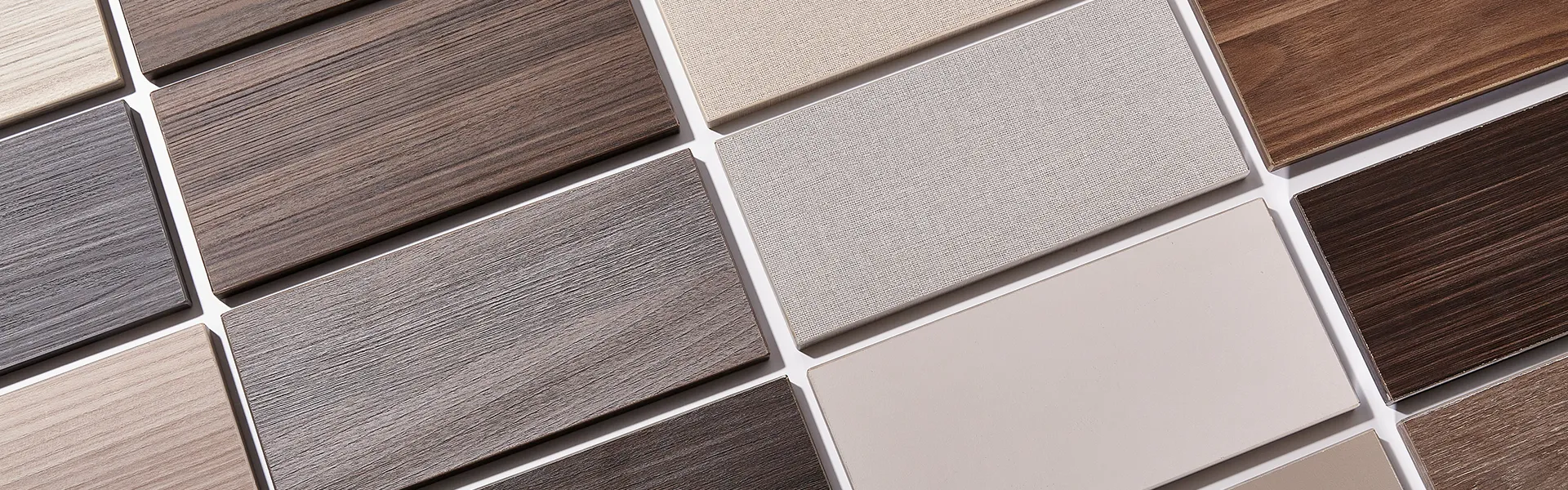
Complete Guide for Custom Whole-Home Furnishings
Full of Practical Tips & Comprehensive Pitfall Avoidance Strategies!
During consultations for custom whole-home furnishings, A salesman will first confirm the materials to be used with customers. To achieve high-quality finished products with reliable environmental performance, material selection and quality control are the top priorities. If you cut corners on PET Board, even with attractive appearances, you may face severe issues after moving in, such as excessive formaldehyde levels, warped boards, peeled edge banding, and short-lived hardware. Hanhua provides this guide to analyze core aspects including substrate core materials, surface veneers, edge banding and paint finishes, helping you make informed choices.
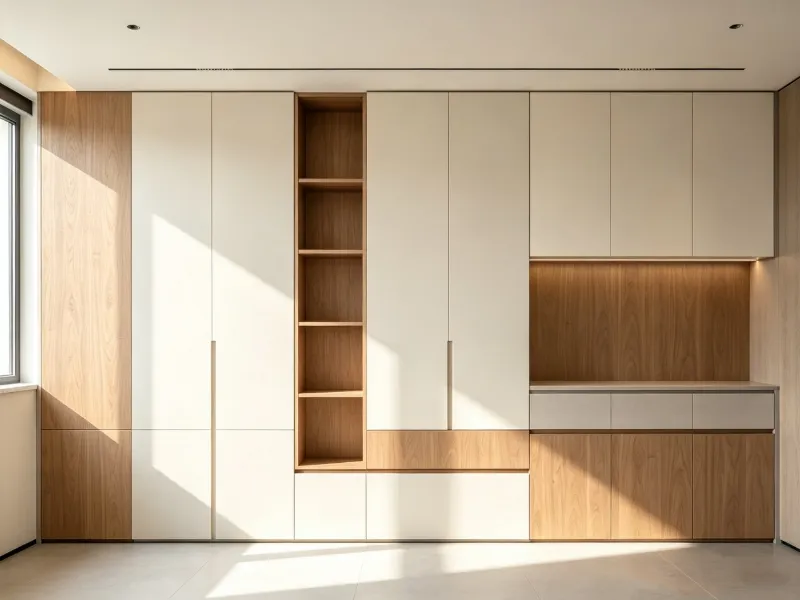
I. Substrate Core Materials
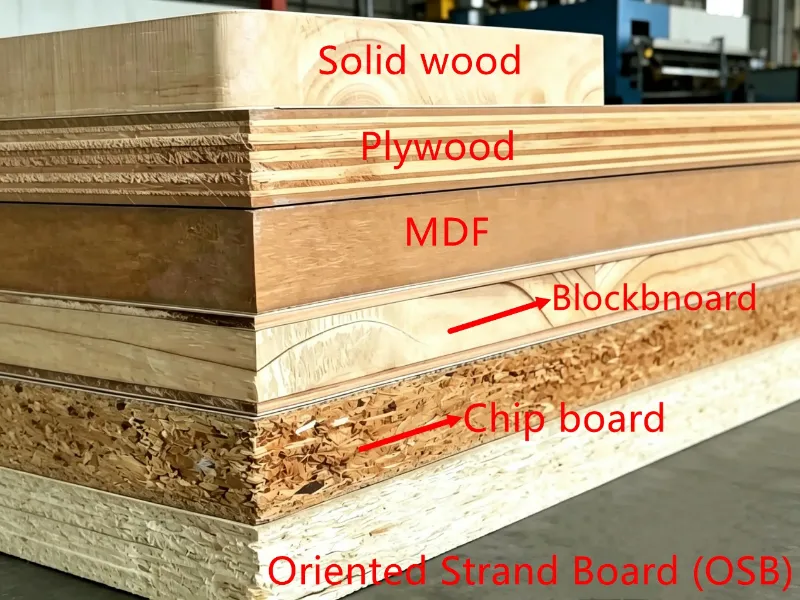
There are several mainstream types of substrate/core materials on the market, with their respective properties, pros and cons detailed below:
1. Medium Density Fiberboard (MDF)
Manufactured by pressing pulverized wood with adhesive; ultra-smooth surface, ideal for carved door panel molding.
Advantages: Low cost
Disadvantages: Poor moisture resistance, prone to swelling, weak screw holding force, low baseline environmental performance, inconsistent quality; not recommended if no carved molding is required
Recommendation: Avoid using MDF for whole-home customization entirely
2. Particle Board (Chipboard)
Produced by pressing crushed wood particles with adhesive.
Advantages: Stable structure with minimal deformation, balanced physical properties, high cost performance
Disadvantages: Susceptible to water-induced swelling
Application Scenarios: Primary material for cabinet bodies from major brands; top pick for general cabinetry. Avoid wet areas such as balconies and bathrooms.
3. Oriented Strand Board (OSB)
Made of directional laid wood strands bonded under pressure.
Advantages: Better moisture resistance than particle board, strong screw holding power, high structural strength and physical stability
Disadvantages: No obvious critical flaws, lower cost performance than particle board
Application Scenarios: Preferred for cabinet doors; optional for cabinet bodies based on budget. Tolerates damp zones but not fully recommended.
4. Plywood (Multi-layer Board)
Constructed with cross-laminated wood veneers bonded with adhesive.
Advantages: Excellent moisture resistance, high structural stability and deformation resistance
Disadvantages: High adhesive consumption; environmental performance relies heavily on brand craftsmanship; mediocre surface flatness
Application Scenarios: Cabinets installed in wet areas
5. Blockboard
Core layer composed of joined small solid wood strips, sandwiched between thin wood veneers and pressed with glue. The popular melamine faced board uses blockboard as its substrate covered with double-sided melamine-impregnated decorative paper, making it a finished veneered panel.
Advantages: Easy to cut and process on-site by carpenters for convenient construction
Disadvantages: Average physical performance, prone to warping and bubbling, inconsistent quality, moderate environmental performance
Application Scenarios: Alternative for on-site built cabinets
6. Finger-jointed Solid Wood Board
Short solid wood timbers are cut into interlocking finger-shaped tenons, glued and spliced into full-size panels.
Advantages: Far lower risk of deformation and cracking than full solid wood planks, more affordable than solid timber, uniform structural strength
Disadvantages: Fragmented wood grain from multiple spliced segments, inferior overall aesthetics compared to single planks; poor craftsmanship may lead to separated joints, glue gaps and local warping
Application Scenarios: Customers seeking solid wood texture with cost-performance demands
7. Solid Wood
Manufactured from single whole logs that are cut, sanded and glued edge-to-edge into full panels.
Advantages: Most authentic natural timber texture, complete natural wood grain, superior visual appeal
Disadvantages: Highly sensitive to temperature and humidity; prone to cracking and warping without proper maintenance; high price tag
Application Scenarios: Premium solid wood aesthetic seekers with unlimited budget
II. Surface Veneer Materials
Substrates act as the skeleton, while surface veneers define appearance and visual effect. Two primary surface treatment methods are used for whole-home customization: paint-free finishes and painted finishes.
1.Paint-Free Finishes
Common types include PVC vacuum forming, melamine double-sided veneer, PET lamination and PP film wrapping.
PVC Vacuum Forming
Soft PVC film is heated, softened and vacuum-absorbed onto the substrate; compatible with complex European-style and irregular carved molding. No separate edge band strips; five-sided wrapping (excluding the back side).
Melamine Double-Sided Veneer
Decorative paper impregnated with melamine resin is thermally pressed onto the substrate as an integrated finish. Melamine faced boards fall under this category. Only suitable for flat panels without molding, requires separate edge banding.
PET Lamination
Food-grade polyester PET film is hot-pressed onto flat substrates via flat laminators. Poor stretchability limits usage to plain flat panels with no carved molding. Available in high-gloss and soft matte fingerprint-resistant textures; film can be applied single-sided or double-sided upon factory confirmation. Separate edge banding required.
Standard PP Film Wrapping
Food-contact grade thin PP film is roller-laminated onto substrates; no carved molding supported. No separate edge band strips, full six-sided wrapping.
Thickened Modified Vacuum-Formable PP Film (≥0.3mm)
Compatible with vacuum forming technology identical to PVC film to create carved molding. No separate edge band strips; five-sided wrapping.
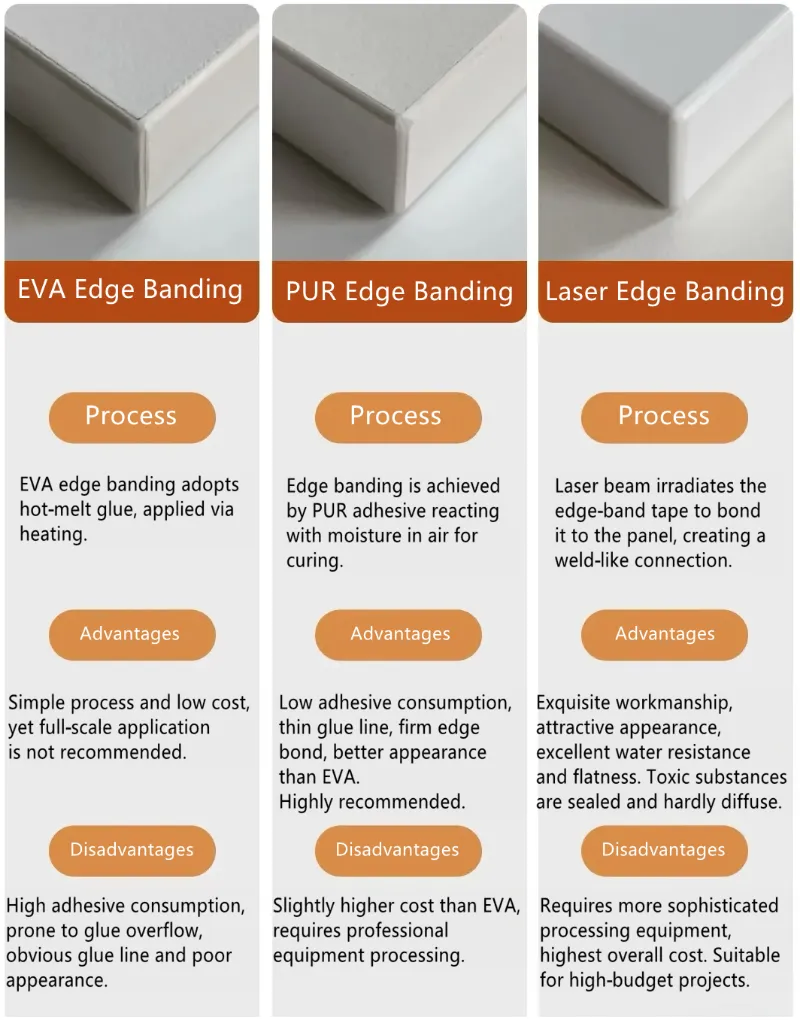
Edge Banding Methods: See Attached Diagram
Pitfall Avoidance Tip: Avoid EVA edge banding as much as possible. If budget constraints force its use, limit application to non-kitchen and non-bathroom areas with strict quality inspection. For regular budgets, laser edge banding is recommended for kitchens and PUR edge banding for other spaces. Full laser edge banding is ideal for sufficient budgets.
2. Painted Finishes
Main categories: Baking varnish, clear varnish, solid mixed paint, and the popular excimer UV soft matte finish.
Baking Varnish
Classified by process: Standard baking varnish & piano-grade baking varnish; classified by effect: transparent clear varnish & opaque mixed paint. Baking varnish referenced by merchants usually refers to solid high-gloss mixed paint that conceals wood grain. If transparent wood grain visibility is required, explicitly confirm if PE clear piano baking varnish is available, which typically incurs customization surcharges. Clear baking varnish is applied on wood veneer or solid wood substrates; mixed baking varnish generally uses MDF substrates.
Advantages: Maximum paint film hardness (3H–4H), oil, water and moisture resistant, suitable for kitchens and balconies
Disadvantages: Deep impact scratches cannot be partially repaired; entire door panels must be returned to factory for re-spraying
Clear Varnish
Applied over natural wood veneers (walnut, oak, cherry, etc.) or solid wood panels, transparent coating retains natural wood grain.
Advantages: Authentic solid wood visual effect
Disadvantages: Low hardness (only 2H), prone to scratches, worst anti-yellowing performance
Mixed Opaque Paint
Opaque solid-color paint fully covering the base material without exposing wood grain; split into solvent-based and water-based variants. Water-based mixed paint is recommended for home renovations for superior environmental safety, usually applied on MDF or plywood.
Advantages: Wide color selection, complete paint film seals substrates against water and penetration
Disadvantages: White mixed paint easily yellows; thick paint layers risk cracking
Excimer UV Soft Matte Finish
UV solid-color base coat is roller-coated as the underlayer, topped with 172nm excimer UV soft matte clear coat.
Advantages: Excellent environmental performance, industry-leading soft touch, fingerprint resistance and stain resistance, 4H scratch-resistant hardness
Disadvantages: High cost, limited exclusively to flat panels; impossible for carved molding doors
III. Environmental Performance Standards
Environmental Grade Ranking of Substrates (From Low to High Performance)
MDF < Particle Board < OSB < Plywood < Blockboard < Finger-jointed Solid Wood < Full Solid Wood
Note: Rankings depend on production techniques; actual environmental performance varies widely between manufacturers and adhesive types, and cannot be generalized.
Environmental Grade of Surface Veneers
All veneer materials except PVC (containing plasticizers) are free of toxic substances. Environmental safety mainly depends on adhesives used during lamination, ranked from best to worst:
PUR hot-melt adhesive > Premium water-based vacuum forming adhesive > Standard water-based cold glue > EVA hot-melt adhesive > Traditional solvent-based adhesive
Melamine double-sided veneer: No extra lamination adhesive, only self-cured melamine resin
Thickened modified PP film: PUR vacuum forming adhesive
PET lamination: PUR flat lamination hot-melt adhesive
Standard thin PP film: Water-based roller cold glue
PVC vacuum forming: Water-based vacuum cold glue
The final environmental rating of finished cabinetry entirely relies on whether surface veneers and edge banding can fully seal toxic substances inside substrates to prevent volatile emissions. Based on the above introduction to substrates and veneers, you can reasonably match materials for your custom furnishings.
Please feel free to contact us!
 Hanhua
 Jake lin