
Article Summary
Choosing interior panel materials often feels harder than it should be. Buyers want a board that looks refined, stays stable in daily use, fits project budgets, and does not create headaches during fabrication or installation. That is exactly why Melamine Board continues to gain attention in furniture production, cabinet systems, commercial fit-outs, and residential interiors.
In this article, I break down what Melamine Board is, where it works best, what pain points it solves, how to compare substrate options, and what to check before placing an order. I also explain how Hanhua Vision (Xiamen) New Material Technology Co., Ltd. approaches product consistency and application flexibility for customers who need decorative panels that are practical as well as visually appealing.
Table of Contents
Outline
- Define Melamine Board in a practical, buyer-friendly way
- Identify the most common sourcing and usage pain points
- Explain the main benefits from design, performance, and manufacturing angles
- Compare substrate options such as MDF, HDF, particle board, and plywood
- Show suitable applications in homes, offices, and commercial projects
- Provide a buying checklist to reduce project risk
- Answer common questions from importers, furniture factories, and contractors
What Is Melamine Board?
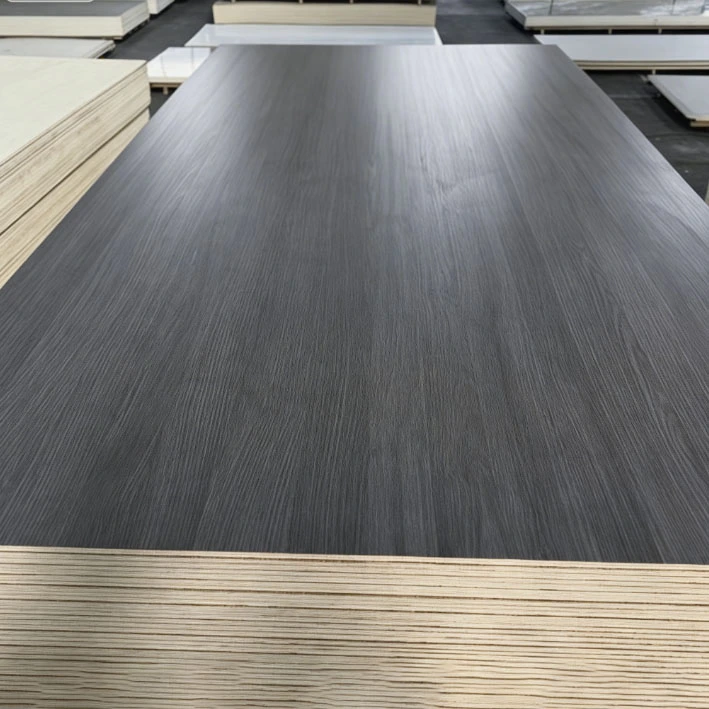
Melamine Board is a decorative panel made by pressing melamine-impregnated paper onto a core board under heat and pressure. The result is a panel with a finished surface that is ready for furniture production, cabinetry, shelving, wall features, and many other interior uses.
What makes this material attractive is not only its appearance. It also simplifies production. Instead of starting with a raw board and adding multiple finishing steps later, fabricators receive a panel that already has a decorative layer. That can help reduce labor steps, shorten lead times, and make batch production more manageable.
For many buyers, the real value of Melamine Board lies in balance. It gives them a broad range of colors and textures while keeping production relatively efficient and costs easier to control. That is one reason the material is widely chosen for wardrobes, cabinets, office furniture, display units, and interior fit-out projects.
If your project needs a surface that looks consistent across large quantities, resists everyday wear, and supports scalable manufacturing, Melamine Board is often one of the first options worth reviewing.
What Problems Does Melamine Board Solve?
Buyers rarely choose a decorative board because of appearance alone. They choose it because a project has real constraints. Budgets get tight. Timelines get compressed. Surface quality has to stay stable across multiple batches. And once installation is complete, end users expect the product to keep looking clean and professional.
Here are the pain points I hear most often:
- Solid wood or natural veneer can push material costs higher than expected
- Painted finishes may involve longer processing cycles and stricter workshop control
- Color inconsistency between batches can create rework and customer complaints
- Daily-use furniture surfaces need better resistance to stains, abrasion, and scratches
- Project buyers need decorative flexibility without managing too many finishing processes
- Factories want boards that cut, edge-band, drill, and assemble efficiently
Melamine Board addresses these issues by combining decorative finish and functional surface performance in a single panel solution. For many furniture makers and contractors, that means fewer production variables and a smoother path from purchase to installation.
Why Do Buyers Choose Melamine Board?
I would not describe Melamine Board as a one-size-fits-all material, because that would oversimplify it. Its strength is that it performs well across a wide range of ordinary but critical needs. That makes it especially valuable for projects where looks, budget, and practicality all matter at the same time.
| Buyer Concern | How Melamine Board Helps | Why It Matters in Real Projects |
|---|---|---|
| Appearance consistency | Factory-finished decorative surface with repeatable patterns and color options | Useful for large furniture orders, chain stores, apartments, and office fit-outs |
| Daily surface wear | Good resistance to stains and abrasion in normal interior use | Helps furniture stay presentable in kitchens, wardrobes, offices, and display areas |
| Production efficiency | Supports common cutting, drilling, and edge-banding processes | Improves workshop flow and helps reduce finishing-related delays |
| Budget control | Balances decorative value and manufacturing practicality | Suitable for both volume production and cost-sensitive projects |
| Style flexibility | Available in solid colors, wood grain, marble-inspired looks, matte, and gloss effects | Allows designers to match different market preferences without changing the whole material strategy |
Another important advantage is sourcing flexibility. Customers can choose different surface looks while also selecting a core board that matches the structural or budget requirements of the project. That combination gives Melamine Board a practical advantage over decorative options that are beautiful but less adaptable in manufacturing.
Which Substrate Should You Choose?
This is where many buyers make better decisions or costly mistakes. The decorative surface matters, but the core board determines much of the panel’s structural behavior, machining feel, and application suitability. The right choice depends on where the board will be used and what the finished product needs to do.
| Substrate Type | Main Strength | Typical Use | Buyer Note |
|---|---|---|---|
| MDF | Smooth and uniform surface | Cabinet doors, furniture panels, decorative components | Good when surface flatness and finish appearance are priorities |
| HDF | Denser structure and refined surface feel | Interior decorative pieces and selected furniture parts | Can be suitable where a denser panel feel is preferred |
| Particle Board | Cost-effective and widely used | Wardrobes, cabinets, shelving, ready-to-assemble furniture | Often chosen for value-driven furniture production |
| Plywood | Stable layered construction | Panels requiring higher structural confidence | A strong option when strength and stability are more important than the lowest cost |
If I were advising a buyer for wardrobe systems and standard cabinetry, I would usually start with a close look at melamine-faced particle board because it often gives a competitive balance between cost and usability. If the priority is a smoother decorative face, then MDF may be more attractive. If the project involves applications where structural stability matters more, plywood-based solutions deserve serious consideration.
This is also where supplier communication matters. A capable manufacturer should not simply ask what color you want. They should ask where the product will be used, what dimensions are needed, how it will be fabricated, and what level of finish consistency the project requires.
Where Can Melamine Board Be Used?
One reason Melamine Board remains so relevant is that it adapts well to different interior spaces. It is not limited to one narrow product category. When selected correctly, it can serve both visual and practical functions in homes and commercial environments.
- Residential furniture: wardrobes, bookcases, side cabinets, TV units, storage systems
- Kitchen and cabinet systems: cabinet bodies, shelving, certain visible decorative surfaces
- Office furniture: desks, filing units, partitions, storage cabinets
- Retail and commercial interiors: display fixtures, counters, shelves, wall-facing elements
- Project-based interiors: apartments, hotels, dormitories, standardized fit-out programs
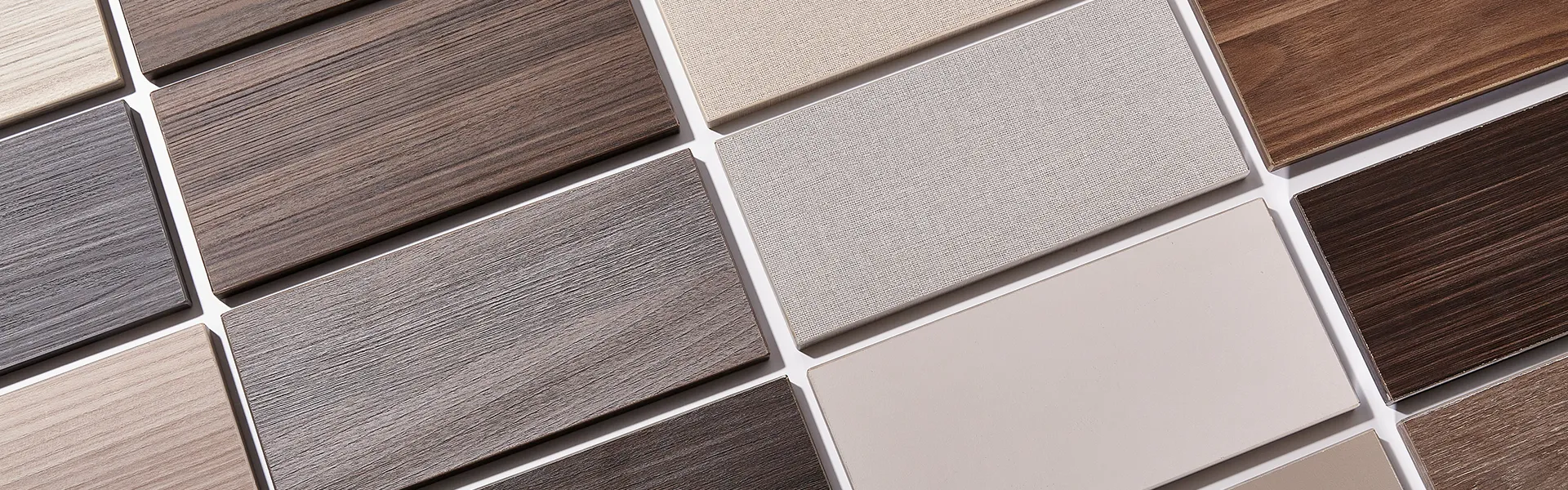
Design variety is another strength. Some buyers want clean solid colors for minimalist interiors. Others prefer wood grain effects for a warmer atmosphere. Some projects call for stone-inspired surfaces to create a premium visual impact without using heavier or more expensive natural materials. A well-developed Melamine Board range makes those choices easier.
For companies like Hanhua Vision (Xiamen) New Material Technology Co., Ltd., this variety matters because buyers today are not choosing boards in isolation. They are often building entire room concepts, product lines, or export collections that need both style coordination and supply reliability.
How Should You Evaluate Before Buying?
I always think buyers are better protected when they ask better questions. Decorative boards can look similar in a photo, but performance in production and on-site delivery can be very different. Before committing to an order, here is the checklist I would use.
- Confirm the substrate clearly. Do not assume all melamine-faced boards behave the same way.
- Review finish consistency. Ask about color matching and pattern stability across batches.
- Check surface suitability. Match the board to expected wear level and environment.
- Clarify size and thickness options. This helps reduce waste and improves cutting plans.
- Request sample evaluation. A sample tells you more than a product photo ever will.
- Discuss fabrication compatibility. Make sure the board suits your cutting and edge-banding workflow.
- Verify supply stability. Project schedules suffer when decorative materials arrive late or uneven.
A dependable supplier should be ready for this conversation. They should be able to explain not just what they sell, but why a certain panel structure fits a certain application. That kind of practical guidance can prevent expensive misalignment between procurement teams, designers, and factory operators.
How Does It Compare with Other Decorative Boards?
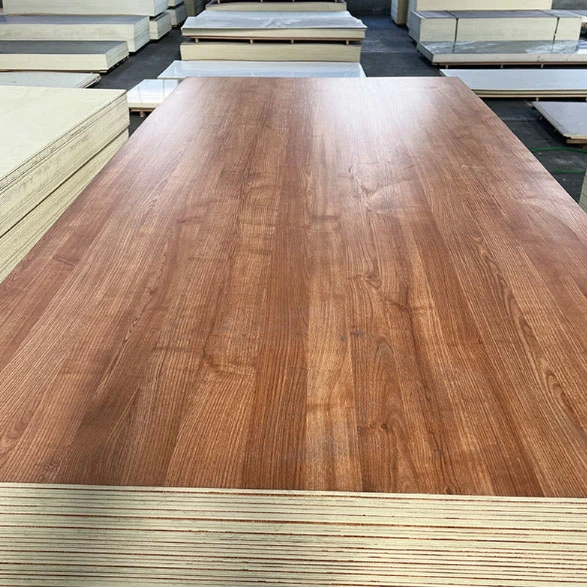
Buyers often hesitate because they are comparing several materials at once. That hesitation is normal. The right question is not whether Melamine Board is universally better than every alternative. The right question is whether it is better for your specific use case.
| Material | Potential Advantage | Potential Limitation |
|---|---|---|
| Solid Wood | Natural texture and premium character | Higher cost, greater variability, and more complex sourcing considerations |
| Natural Veneer Board | Real wood appearance | May require more attention to finish consistency and processing workflow |
| Painted Board | Custom visual effect and finish expression | Can involve longer processing cycles and stricter finishing control |
| Melamine Board | Balanced decoration, efficiency, and cost control | Must be matched carefully with the right substrate and application |
If your goal is to produce practical interior products at scale, keep surface appearance consistent, and avoid unnecessary finishing steps, Melamine Board is often one of the most sensible options available.
FAQ
Is Melamine Board suitable for wardrobes and cabinets?
Yes, it is widely used for wardrobes, cabinets, shelves, and many other interior furniture applications because it combines decorative appearance with practical surface performance.
Can Melamine Board be customized in size and thickness?
In many cases, yes. Buyers should confirm standard sizes, custom cutting options, and thickness availability before production planning begins.
Does the substrate matter if the surface looks the same?
Absolutely. The core board affects structural feel, machining behavior, and suitability for different furniture or project uses.
Is Melamine Board a good option for project procurement?
It can be a strong option for project purchasing when consistency, scalable production, and practical cost control are important.
What should I ask a supplier before placing an order?
Ask about substrate type, finish stability, available patterns, thickness options, size range, sample support, and production consistency across batches.
Why Does the Right Supplier Matter as Much as the Board Itself?
The material is only part of the story. What often determines project success is whether your supplier understands the link between decorative goals, production methods, and end-use requirements. A board that looks good in a catalog still needs to perform in real fabrication and real interiors.
Hanhua Vision (Xiamen) New Material Technology Co., Ltd. focuses on decorative panel solutions that support furniture makers, contractors, interior brands, and project buyers who need practical selection options, stable product presentation, and reliable cooperation through sampling and order execution.
If you are planning a furniture line, cabinet project, or interior decoration program and want a dependable Melamine Board solution that aligns with your style, application, and purchasing goals, contact us today. A well-matched panel can save time, reduce risk, and improve the final result more than most buyers expect.
 Hanhua
 Jake lin